


Silver finds itself facing conflicting forces: robust industrial consumption going forward, heavily constrained above-ground supplies, and overwhelming near-term macroeconomic headwinds. Silver, much like the larger precious metals complex, has suffered significant downward pressure as of late, especially this week in direct response to unexpectedly high U.S. consumer inflation data.
Rocky Markets
For example, on Tuesday, spot silver prices fell 3.9%, dropping aggressively to $51.32 per ounce as speculators rapidly liquidated their paper positions in the face of expectations for a more aggressive pace of interest rate hikes coming out of the Federal Reserve. The macroeconomic repricing of interest rates has overshadowed, at least temporarily, the unique and highly constructive structural supply-and-demand fundamentals that silver currently enjoys.
Longer-term, Silver Looks Very Bullish
However, fundamental analysis of the physical silver market remains extraordinarily bullish. Simply put, there is plenty of demand going forward for silver, and that will not change in the physical sense. According to the latest comprehensive market data released by the Silver Institute, the global silver market has officially entered its fifth consecutive year of structural supply deficits.
Despite a modest 3% overall increase in global mine production, the total influx of newly mined metal has proven entirely insufficient to physically balance the market. In other words, what you are seeing is based on paper silver, not the underlying demand.
Furthermore, while global recycling volumes rose by 2%, severe global refinery bottlenecks have effectively capped the physical market’s ability to process the secondary supply. This creates a persistent shortfall that has forced the global market to continuously draw down existing stockpiles.
Silver Price Forecast
Every new Silver analysis as it publishes, today's technical signal and key levels, live price — on one page.
See all Silver forecastsOn the demand side, the market experienced a slight 2% overall contraction over the last year, primarily due to price-sensitive demand destruction in jewelry sectors. The Silver Institute heavily emphasizes that the market has clearly and permanently entered a new era of structurally reduced above-ground stocks, virtually guaranteeing that, once the current cycle of macroeconomic tightening concludes, the fundamentally undersupplied nature of the physical market will dictate longer-term price discovery.
Fed Manufacturing Reports
Some of the recent numbers worth paying attention to include the Federal Reserve’s October 16 G.17 report, which covered September. Total industrial production rose 0.7% in September after edging up 0.1% in August. Manufacturing output increased 0.3% in September. Within manufacturing, primary metals, machinery, and electrical equipment, appliances, and components each gained over 1%, while motor vehicles and parts fell 3%.
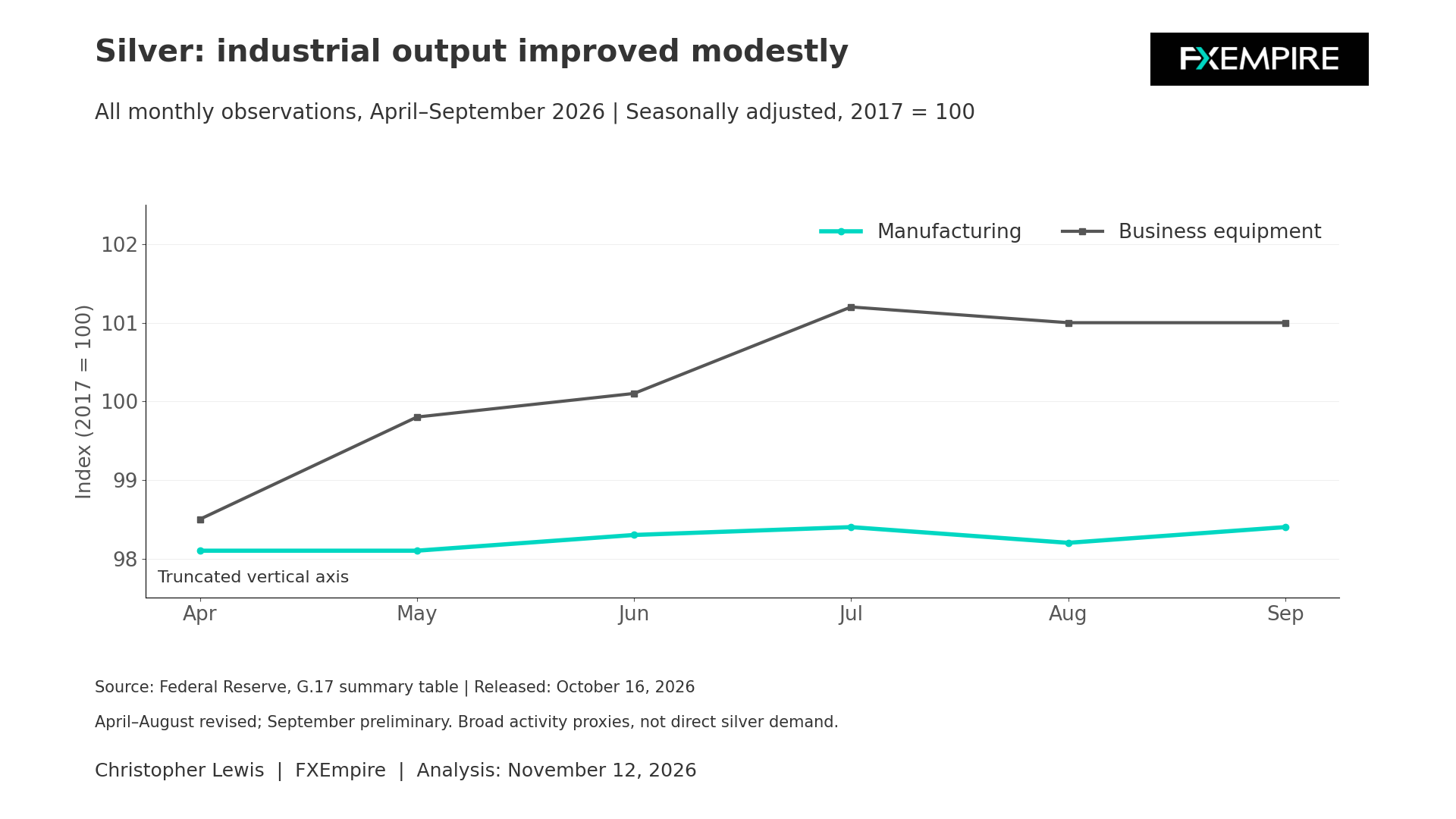
The next G.17 release is November 17 at 9:15 a.m. ET. It should show whether or not the production gains in September persisted. Until then, industrial production data is considered stale relative to the CPI release that just shocked the market.
CPI Didn’t Help
Speaking of the CPI release, the BLS reported October CPI of 0.4% month-over-month, compared with a 0.6% increase in September. Core CPI rose 0.3%, the same monthly pace as in August and September. Energy prices increased 0.7% in October, while the natural gas component declined 0.8%. Softer headline inflation could ease pressure on rate expectations, but clearly it is not being priced into the market at the moment.
The more important factor is probably the Treasury’s par real-yield data showing the 5-year rate at 2.56% and the 10-year rate at 2.78%, up from 2.35% and 2.63% the previous week.
Technical Analysis
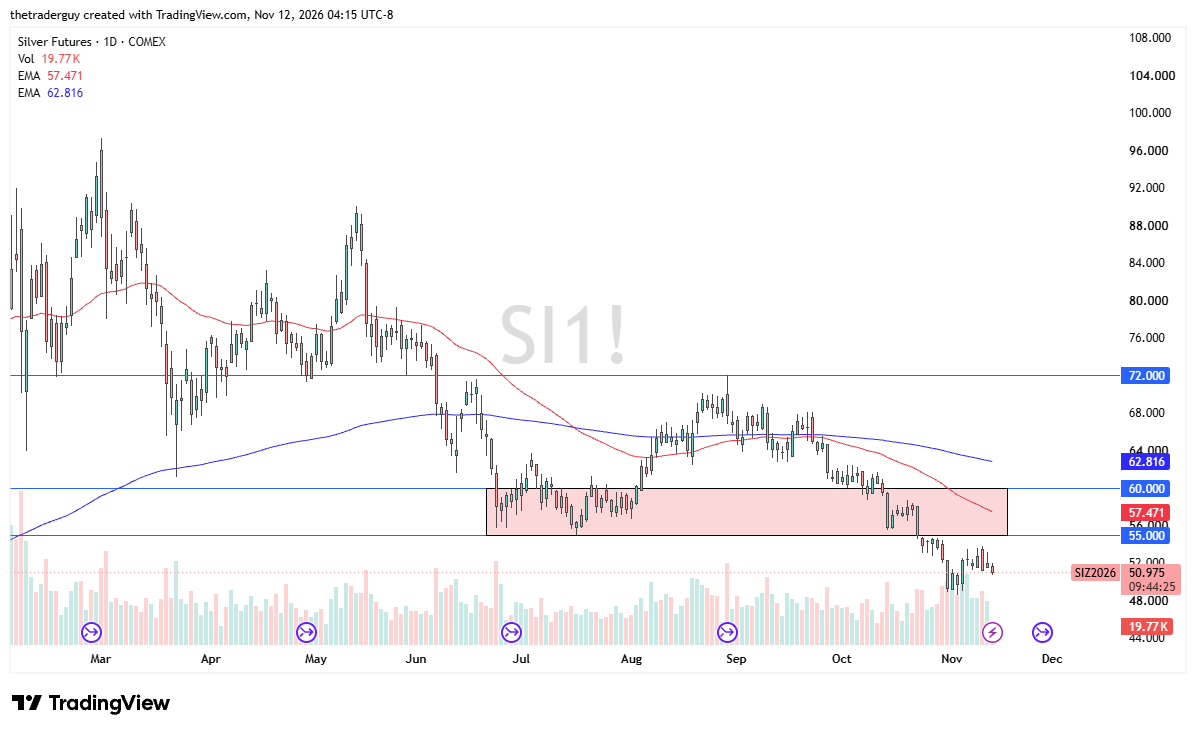
It looks very much like a market that is going to continue to struggle. As a result of this pressure, one is more likely than not to be looking to fade rallies. I believe that the $55 level will continue to be a ceiling for the market in these conditions and will continue to look for further selling until the rates situation changes.
If you’d like to know more about how to trade gold and silver, please visit our educational area.